About Me
A problem solver at the core
I’m not afraid to get my hands dirty and jump straight into a complex and ambiguous problem, whether that’s learning the intricacies of the ecosystem, investigating social and business implications, or deeply understanding data structures that power a system.
I do what’s necessary to find solutions that will truly have positive long-term impact.
Why I design
Ultimately I became a designer because I love creating experiences that make people feel happier, whether that’s through eliminating friction and frustration or adding delight.
My previous career path in medicine showed me how little experience is considered compared to utility and productivity in the world. I decided to switch to a career in design because I realized I wanted to focus on impacting the world through the experiences I create rather than through knowledge I apply.
However, the skills I gained in medicine immensely benefit me every day - rigor, rapport-building, and scientific thinking.
My design philosophy
To truly achieve the best result, I believe a designer must balance rigor, empathy, and practicality. If just one of these is missing, the final solution will be lacking in some way.
Solve the right problem
Too often product teams jump straight to a solution that solves the first problem they see, but if you dig deeper you’ll often find a different source. I dig into the details to find the root of the problem and aim for solving that.
Lead with empathy
In addition to users of a product, there are usually many layers of humans in the ecosystem of a problem. I aim to consider the perspective of each to ensure my impact can be positive in a wide-ranging manner.
Done is better than perfect
Even with empathy, clear goals, and an innovative vision, if one is too ambitious then the work will never get done. I advocate for solutions that are feasible and incrementally get us to our desired future.
How I approach design
I’ve distilled the process I take into the following 5 high-level steps. Of course, every situation requires adapting the specific methods and timing to the scale and type of problem being tackled.
1. Understand
I read, interview, and investigate to ensure I truly understand the problem to be solved and surrounding ecosystem.
2. Strategize
Considering the core goals, potential impact, resources, and time available, I propose a plan for how we should proceed with the work.
3. Design
I visualize and share a variety of concepts for the desired experience, refining them through feedback, testing, and design principles.
4. Socialize
To ensure planned work and UX improvements get executed, I regularly advocate for the importance to stakeholders.
5. Implement
Finally, I document thoroughly and collaborate with Engineering & QA to ensure designs are implemented as expected.
How I collaborate
First and foremost, I focus on getting to know each person I work with as a human. This creates a foundation for more positive collaboration and conversations and as a bonus, creates potential for friendship and connection.
When it comes to the design work, I take some time to consider each perspective shared, incorporating those perspectives with other factors such as goals, design principles, user feedback, feasibility, and my previous experience to craft and socialize the solution I predict will have the most impact.
How I lead
Leadership to me means being an example, guiding others towards a common goal, sharing knowledge, and supporting others holistically. I apply a leadership mindset in my day-to-day work, regardless of my title, because I want to create the most positive impact I can within the sphere of influence I have. I have skills, knowledge, and empathy to share, so why not share it?
Some examples of how I lead:
- I regularly share new skills and knowledge I gain about AI and enterprise design with my design team
- I mentor CMU MHCI graduate students yearly (since 2021 till now, 2026)
- I gave a lecture on Prototyping for the CMU MHCI Class of ‘25
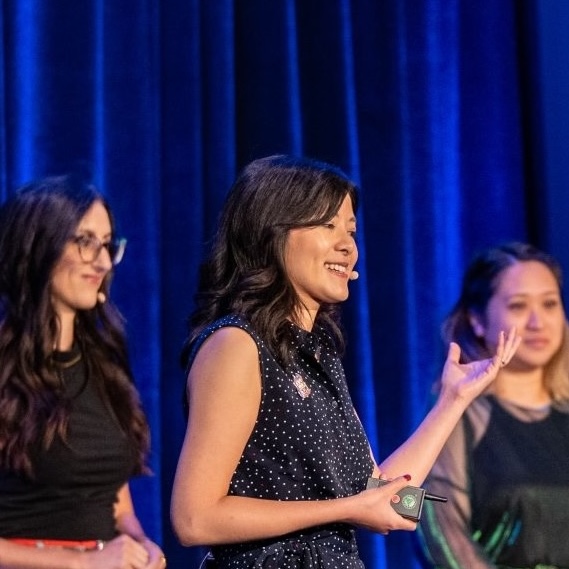
- I spoke at the UX Summit, a Disney design conference in 2025, where I shared my learnings about designing for complex enterprise spaces
How I build community
One of my strongest passions is building community, which I see as when a group of people feel belonging and fulfillment from spending time together.
I strive to create a feeling of community wherever I go, because ultimately I think it improves the experience of those around me and makes a team feel more motivated and happy.
Some specific examples where I have built community:
- The CMU MHCI SoCal Alumni group I created to help alumni connect with each other
- The AI Learning Club I started in my Disney Enterprise Design team to encourage others to learn about AI together
- My ongoing efforts to advocate for and organize in-person summits for my product team at Disney.